

For finished paintings and canvas prints, you choose between cotton, linen or a synthetic blend, then a primer or ground, then a wrap and edge finish. Fine cotton with smooth priming suits photographic detail; linen with a coarser ground suits painterly oil work; a synthetic blend with pigment inks and a protective coat suits printed pieces destined for busy commercial spaces. For a starting point, Winsor & Newton’s priming guidance and a physical sample from a supplier like Frametheworld will settle most of the remaining questions.
TL;DR:
- Cotton canvases are ideal for detailed prints but may sag over time on large formats, requiring careful tensioning and sample checking before purchase.
- Linen canvases offer superior tension retention for long-lasting, archival oil paintings but are more expensive and harder to stretch tightly.
- Blended canvases resist humidity and shape changes, making them suitable for commercial spaces with fluctuating room conditions.
- Acrylic gesso is the most common primer for versatile, fast-drying support, while oil grounds are better suited for large oil pieces to prevent cracking.
- Using a physical sample and obtaining written confirmation of materials and coatings is essential before commissioning or customizing larger canvas orders.
Table of Contents
- What are the main canvas texture options?
- How does priming affect canvas texture and durability?
- How do texture levels and finishes affect the final look?
- What mounting and edge options should you choose?
- Decision checklist for choosing your canvas surface
- A publisher’s view on samples and bespoke texture
- Order a textured or bespoke canvas from Frametheworld
- Sources
- FAQ
What are the main canvas texture options?
Every canvas surface starts with a fibre choice, and that choice decides almost everything else about how the finished piece looks and behaves.
Cotton has a fine, even weave that’s easy to predict and cheap to produce. It takes detail well, which is why it dominates the print market, but it stretches more than other fibres and can sag slightly on large formats over the years. Linen is stiffer and stronger, with an irregular natural weave that holds tension for decades rather than years, which is why conservators and oil painters lean towards it for archival work. It costs more and is harder to stretch tightly, but Blick’s canvas comparison notes it’s the standard for pieces meant to outlast their owners.
Synthetic and blended canvases (usually cotton/polyester) sit between the two. They resist humidity swings far better than pure cotton, keep their shape in changeable rooms, and give a pleasing surface at a lower cost than linen. That combination makes blends a practical choice for offices, hotels and other commercial interiors where nobody is going to re-tension a canvas every few years.
- Cotton: fine weave, budget-friendly, best for crisp detail, prone to slack over time in large sizes.
- Linen: tight, irregular weave, exceptional tension retention, the standard for archival oil commissions.
- Blends: dimensionally stable, humidity-resistant, a strong middle ground for commercial and trade orders.
Room conditions matter as much as the artwork itself. A canvas hung above a radiator or in a humid bathroom behaves differently depending on its fibre, so match the material to where the piece will actually live, not just to the image on screen.
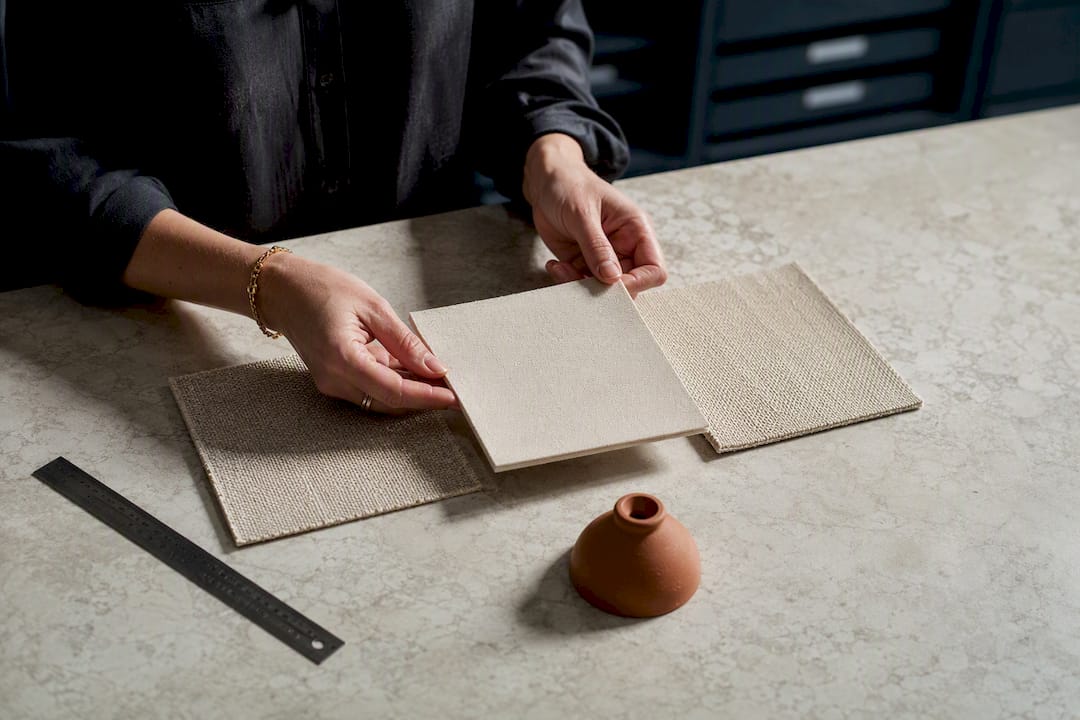
Pro Tip: Always request a physical swatch before committing to a large or bespoke piece. Screen colour and texture never translate perfectly, and a 10cm sample tells you more in five seconds than any product description.
How does priming affect canvas texture and durability?
Sizing, priming and grounds do three separate jobs, and mixing them up is one of the more common mistakes buyers and even some painters make.
Sizing seals the raw fibres so paint and its oils never touch the fabric directly. Priming, usually with gesso, builds the actual painting surface on top of that seal. A ground is the final layer the artist or printer works on, and its texture, absorbency and tint all shape the finished look. Winsor & Newton’s sizing and priming guide treats acrylic gesso as the universal default because it works for both acrylic and oil paint and dries fast enough for commercial production.
Oil painting complicates this slightly. Golden Artist Colors points out that acrylic grounds stay permanently flexible while oil paint stiffens with age, so for large or heavily commissioned oil works, an oil ground over a size reduces the long-term risk of cracking or delamination.
- Acrylic gesso: fast, flexible, works across most media, the standard on ready-made canvases.
- Oil ground/primer: slower to prepare, better long-term match for oil paint on large pieces.
- Specialised or clear grounds: used where absorbency or a particular texture is needed for a specific technique.
More coats and light sanding between them smooth the surface further, which matters for fine detail work. Most pre-primed canvases arrive ready to use, but adding one or two extra coats before a highly detailed piece is a small step that pays off.
How do texture levels and finishes affect the final look?
Fine, medium and coarse aren’t just tactile descriptions. They change how an image reads at normal viewing distance, and they interact differently with paint and print.
A fine texture almost disappears at arm’s length, which is exactly why it suits photographic reproductions and detailed portraits. Medium texture gives just enough tooth to hold visible brushwork without fighting the image, the most common choice for general oil and acrylic pieces. Coarse texture shows its weave even from across a room, and it’s where impasto and heavy glazing really earn their keep, though it can blur very fine printed detail.
- Fine: best for detail-heavy prints and photorealism, near-invisible weave.
- Medium: the versatile middle ground for most painted commissions.
- Coarse: suits expressive brushwork, less suited to crisp printed text or fine lines.
For printed canvases, the coating matters almost as much as the weave. DailyNewsConsumer’s breakdown of canvas prints notes that pigment inks paired with a matte or satin protective coat resist scratching and moisture far better than uncoated dye-ink prints, and hold their colour for longer under normal indoor light.
Pigment inks with a protective laminate consistently outlast dye-based prints for lightfastness and scratch resistance, according to that same source, which is why most professional print houses default to pigment ink for anything destined for a wall rather than a folder.
What mounting and edge options should you choose?
The wrap you choose decides how much of the image survives at the edges and how the piece sits on a wall without a frame.
- Gallery wrap stretches the canvas around the sides of the frame to enable a frameless hanging with the image continuing, mirroring, or fading into a solid colour at the edge, as Wikipedia’s overview of gallery wrap explains.
- Deeper stretcher bars (often 1.5 inches or more) suit heavily textured paint or large canvases, since a shallow bar can bow under weight or thick impasto over time.
- Mirror or colour wraps protect the composition at the edges rather than cropping into it, which matters when the original image has important detail close to the border.
Cropping is the detail people forget until the piece arrives. DailyNewsConsumer notes that a standard gallery wrap consumes roughly the width of the stretcher depth plus the fold, so anything near the edge of the source image can vanish around the side. Ask for a proof, or better still, an approved preview, before a large piece goes into production. Frametheworld’s gallery wrap guide breaks down stretcher depth and edge treatments in more detail if you’re weighing this up for a specific room.
Decision checklist for choosing your canvas surface
Work through this in order and you’ll avoid the two most common regrets: the wrong texture for the medium, and a cropped image nobody checked beforehand.
- Identify the look you want first: crisp detail, visible brushwork, or a heavily tactile surface.
- Pick the material to match: cotton for detail and value, linen for archival oil, a blend for commercial durability.
- Confirm the primer or ground with your supplier, especially for large oil commissions where an oil ground matters.
- Choose a texture level (fine, medium, coarse) and, for prints, confirm pigment ink and a protective coat.
- Decide on wrap type and stretcher depth, particularly for heavily textured or oversized pieces.
Before you place a bespoke order, ask your supplier three things: can they send a physical sample, what primer or ground do they use, and what ink and coating go on printed pieces. A supplier who can’t answer clearly, or who won’t provide a proof before a large commission, is a red flag worth taking seriously. For guidance on custom print finishing specifically, Frametheworld’s notes on customising prints cover the practical side of ink and coating choices, and print partners such as BoxPrintify’s photo poster range show how gallery-wrapped finishes translate across different production setups.
Pro Tip: Get written confirmation of the primer type and ink/coating combination before a large commission goes into production. Verbal assurances are easy to forget once the invoice is paid.
A publisher’s view on samples and bespoke texture
Buyers ask for texture advice more than any other single question, and the honest answer is that no photograph replaces a physical sample. The bespoke process is built around that reality: request a sample swatch, approve a preview before painting starts, and lean on trade support for larger commercial runs. The texture-forward Plaster Art collection shows what heavy, tactile priming actually looks like once it’s on a wall rather than a screen, which is usually the moment a client’s decision firms up.
— Lennard
Order a textured or bespoke canvas from Frametheworld
This service is the alternative to guessing from a thumbnail: pieces are hand-painted to order, with previews and unlimited revisions before anything ships, backed by a satisfaction guarantee and free returns. That matters most exactly where this guide has been pointing you: texture and finish decisions that are hard to reverse once paint is dry or a print is mounted. Browse the handpainted masterpieces collection to see fine, medium and coarse textures side by side, or explore the abstract wall art range if you want to see how heavier texture reads in a modern interior. For period or large-format commissions, the Landscape collection demonstrates linen-style depth at scale. Request a material sample, review a preview of your piece, or contact trade support for a commercial-volume order. All three routes start from the same page: pick a collection, tell Frametheworld what the piece needs to do, and let the sample settle the rest.
Sources
- Gallery wrap — Wikipedia
- Canvas types — Blick / Dick Blick (canvas buying guide)
- Preparing a painting support — Golden Artist Colors
FAQ
What’s the difference between cotton and linen canvas texture?
Cotton has a finer, more even weave suited to detail and printing, while linen is stiffer, holds tension for longer, and is the standard choice for archival oil commissions.
Should I choose acrylic gesso or an oil ground?
Acrylic gesso works for most acrylic and general oil pieces, but an oil ground is often better for large archival oil commissions because it ages alongside oil paint rather than staying permanently flexible.
What texture is best for a printed canvas?
A fine to medium weave with pigment inks and a matte or satin protective coat gives the best detail and lightfastness for printed artwork.
Does Frametheworld offer canvas samples before ordering?
Yes, Frametheworld supports requesting physical material samples and approved previews before a bespoke or large commission goes into production.
How deep should stretcher bars be for heavily textured paintings?
Deeper bars, often 1.5 inches or more, help prevent bowing under thick paint or on large canvases, compared with the shallower depths used for lighter, flatter pieces.


Laat een reactie achter
Deze site wordt beschermd door hCaptcha en het privacybeleid en de servicevoorwaarden van hCaptcha zijn van toepassing.