

Plan the art into the brief from day one. A single large-scale or site-specific commission will outperform a retrofitted print every time it comes to guest impact and longevity. For designers and procurement teams building that brief, a trade route that covers bespoke commissions, batch production, and the sizing and fire-rated framing detail that hospitality projects demand is available.
TL;DR:
- Large-scale and site-specific art commissions outperform retrofitted prints in guest impact and longevity, especially in high-traffic zones.
- Hotel zoning requires different art approaches: anchor pieces in lobbies, repeated motifs in corridors, restrained headboard art in guest rooms, and textured works in bars and public areas.
- Materials like aluminium panels and fabric-backed vinyl are more durable and impact-resistant, while fire classification requires certificates verified before batch production.
- Art installation heights and sizes vary by zone, with large walls needing impactful pieces from across the room, and guest room art scaled to sightlines from the bed.
- Embedding art into architecture from the design stage boosts guest memory and social sharing, involving local artists or regional themes to enhance brand storytelling.
Table of Contents
- Hotel wall art ideas by zone: lobby to back-of-house
- What materials survive hospitality wear and tear?
- How big should hotel wall art be, and how high should it hang?
- What should a hotel art brief and procurement timeline include?
- Why is hotel art being embedded into architecture in 2026?
- Procurement-ready checklist for hotel wall art
- Trade proof: what to expect from a hospitality art supplier
- How do you maintain hotel wall art over time?
- What safety and compliance rules apply to hotel wall art?
- Can hotel wall art include digital or interactive elements?
- What I’ve learned briefing art into hotel projects
- Order hand-painted and bespoke wall art through Frametheworld
- Sources
- FAQ
Hotel wall art ideas by zone: lobby to back-of-house
Different zones ask different things of a wall. A lobby needs presence; a corridor needs rhythm; a bedroom needs restraint. Treating every wall the same way, whether it is a 40-metre corridor or a six-square-metre snug bar, is the single most common mistake in hospitality art briefs.
Start with the space that sets the tone. Architectural Digest’s advice on scale and layering for hotel-style bedrooms applies just as well to public areas: the biggest piece in the room should earn its size, not just fill a wall.
- Lobby: a large-format anchor piece, whether a single canvas, a multi-panel work, or a sculptural installation, that defines brand identity and gives guests a reason to photograph the space. See our notes on why lobby art matters for placement logic.
- Corridors: repeated motifs or a narrative sequence that guides guests toward their room and builds memory through pattern rather than a single statement piece.
- Guest rooms: a restrained headboard piece sized to sightlines from the bed, in calmer palettes and textures that help with acoustic softness rather than fight it. Our bedroom sizing guide covers proportion in more depth.
- Bars and restaurants: higher-contrast, texture-rich work that reads well under low or warm ambient lighting, where a flat matte print tends to disappear.
- Meeting rooms and back-of-house: durable, low-maintenance pieces in the brand palette. This is where practicality matters more than drama, and where a scratch-resistant finish earns its keep daily.
Our zone-by-zone framework, from lobby to suite, goes into more detail on matching format to function room by room.
What materials survive hospitality wear and tear?
Canvas is forgiving and easy to refresh, but it dents and marks more readily in high-traffic zones than a glazed or panel-mounted piece. Framed and glazed prints protect the surface but add glare risk under spotlighting; aluminium composite panels resist knocks well and suit corridors and stairwells; fabric-backed vinyl and direct wallprinting embed the image into the wall itself, removing dust-trap frames altogether, an approach detailed in current hotel wallprinting trend coverage.
Fire classification is where many briefs fall over late. UK fire-rated framing typically calls for BS 476 Class 0 or Class 1, or an equivalent Euroclass rating on backing boards, mouldings, and mount materials. Corridors, stairwells, and escape routes usually carry stricter surface-spread-of-flame requirements than a guest room or lounge, so confirm the standard with the fire safety officer before specifying, not after installation.
Pro Tip: Request the fire test certificate alongside the sample, not after the batch order. It is the single most common cause of last-minute rework on hospitality art projects.
- Canvas: light, affordable, needs periodic re-tensioning.
- Glazed/framed prints: protected surface, watch for glare.
- Aluminium composite panels: strong impact resistance, ideal for corridors.
- Fabric-backed vinyl/wallprinting: seamless, architectural, minimal dust traps.
How big should hotel wall art be, and how high should it hang?
A lobby wall behind a 6-metre reception desk cannot follow the same ratio as a headboard; it needs a piece (or grouped set) that reads from across the room, often filling closer to half the wall height but the majority of its width.
- Headboards and guest rooms: size the piece to 50 to 75% of the headboard width, centred on eye line from a seated or reclined guest, roughly 1.4 to 1.5 metres from the floor to the piece’s centre.
- Lobbies and seating areas: hang for the standing eye line, around 1.5 to 1.6 metres to centre, but scale the piece to dominate the wall from the entry sightline, not from close inspection distance.
- Corridors: keep a consistent hang height across the run so repeated motifs read as a sequence rather than a scattered collection.
- Installation: check the substrate before fixing anything heavy, use structural fixings rated for the piece’s weight, and confirm batch consistency across multiple identical or paired works before they leave the workshop.
Our guide to styling large-format art covers grouping and spacing rules for pieces that need to work as a set.
What should a hotel art brief and procurement timeline include?
A workable brief answers seven questions before a single quote goes out: scale, sightlines, lighting conditions, materials, fire-rating class, finish, and batch quantity. Skip any one of them and you risk a sample that looks right on a desk but fails on site.
Lead times vary by format. Bespoke single-artist originals typically need four to twelve weeks from deposit to delivery, while multi-panel or large-scale commissions often run longer and should be built into the project programme rather than squeezed in at the end. Ready-to-ship collections move faster, which makes them useful for pilot rooms while a bespoke commission is still in production.
- Approve a sample or proof before committing to a full batch.
- Install a pilot in one or two rooms and review under real lighting before scaling up.
- Move to batch production only once the pilot is signed off.
- Request supplier certificates and batch documentation before final payment, not after installation.
Pro Tip: Budget for a pilot room separately from the batch order. It is a small line item that catches lighting and colour issues before they multiply across 200 rooms.
Why is hotel art being embedded into architecture in 2026?
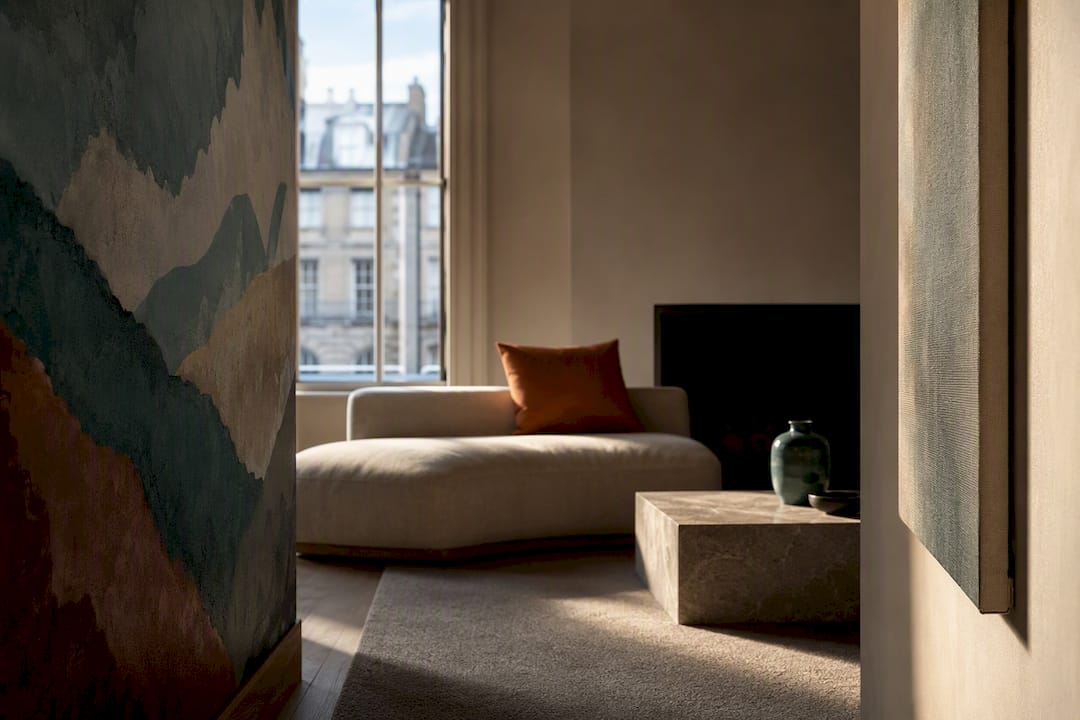
The clearest shift in 2026 hospitality design is moving art from a decorative afterthought to something planned into the architecture from concept stage. A retrofitted print, however good, is chosen after the walls, lighting, and furniture are already fixed. An embedded, site-specific commission is designed alongside them, coordinated with the lighting and M&E plan rather than dropped in afterwards.
That distinction changes what guests remember. Tactile textures, hyper-local murals, and custom printing are being treated as strategic investments rather than finishing touches, because a mural tied to the building’s actual location generates far more social sharing than generic abstract prints ever did.
- Commission local artists or reference regional landmarks, materials, or colour palettes.
- Coordinate the art brief with lighting design before either is finalised.
- Treat feature walls as marketing assets, not just decoration.
See how planned artwork supports brand storytelling for more on turning a wall into a recognisable part of the guest experience.
Procurement-ready checklist for hotel wall art
Drop this into a tender or RFP as a starting point, then adjust for the specific property.
- Confirm scope: zones, wall dimensions, and quantity of pieces required.
- Specify materials and required fire-rating class per zone.
- Set batch quantity and finish (matte, glazed, panel, printed).
- Confirm installation method and structural fixing requirements.
- Request handover documentation: material certificates, fire test reports, and warranty terms.
| Stage | What happens | Typical output |
|---|---|---|
| Concept | Brief agreed, references gathered | Approved concept sketch |
| Sample | Single sample or proof produced | Signed-off sample |
| Pilot | One to two rooms installed | Pilot review notes |
| Batch | Full production run | Certified, documented batch |
Our framing process guide walks through the handover paperwork in more detail.
Trade proof: what to expect from a hospitality art supplier
Frametheworld works with trade clients on hand-painted, bespoke wall art, covering customisation by size, style, and theme alongside batch runs for multi-room rollouts. Ask any supplier, Frametheworld included, for material specs, fire test certificates, and a written batch consistency statement before signing off a large order.
How do you maintain hotel wall art over time?
Cleaning regime should be decided at the specification stage, not worked out after installation. Canvas needs a soft, dry microfibre dust routine; anything damp risks warping the stretcher bars over time. Glazed pieces tolerate a standard glass cleaner but need checking for seal integrity where humidity is high, particularly near bathrooms, spas, or pool areas.
Panel-mounted and printed wall surfaces are generally the easiest to maintain in high-traffic corridors, since a wipe-down with a non-abrasive cloth handles most marks without damaging the print layer. Fabric-backed vinyl needs slightly more care, as aggressive scrubbing can lift the surface texture that gives it its tactile quality in the first place.

Build a maintenance line into the original brief: which finish needs professional cleaning versus in-house housekeeping, and how often. A five-year repaint or reprint cycle is realistic for high-traffic corridors under standard hotel lighting, while lower-traffic guest room pieces in indirect light will usually outlast that by several years. Keep a record of the original supplier, material spec, and batch reference so a damaged panel in year three can be matched exactly rather than replaced with a visibly different piece. That single detail, a saved spec sheet, saves more disputes with housekeeping and facilities teams than any cleaning schedule.
What safety and compliance rules apply to hotel wall art?
Fire safety governs almost every material decision in a hospitality art brief, and the rules differ by location within the building. Corridors, stairwells, and designated escape routes generally face the strictest surface-spread-of-flame requirements, which affects the backing board, the frame moulding, and even the mount board behind the print, not just the visible surface finish.
Confirm the required classification with the building’s fire safety officer at brief stage, since a specification that passes in a bedroom will not automatically pass in a stairwell. Ask suppliers for written certification, not a verbal assurance, and check that the certificate matches the specific batch being delivered rather than a generic product line reference.
Beyond fire safety, structural fixing matters for anything heavy or oversized. A large panel or multi-piece grouping needs fixings rated for its actual weight and the wall substrate behind it, confirmed by whoever is managing the installation, not assumed from the piece’s apparent lightness. Accessibility guidance also plays a role in public areas: protruding frames or sculptural elements near circulation routes need clearance checks so they do not become a hazard for guests with mobility aids or visual impairments. None of this replaces a full building fire risk assessment, but it does mean the art brief and the fire safety brief need to be written by people talking to each other, not in isolation.

Can hotel wall art include digital or interactive elements?
Some hotels are pairing static art with digital layers rather than replacing it entirely. Digital canvases and framed displays can rotate curated imagery in lobbies, giving a single feature wall more than one identity across a day or season without a full reinstall. Interactive touchpoints, such as a corridor mural that responds to motion or a lobby installation tied to local weather or time of day, are appearing in flagship properties as a differentiator rather than a standard fixture.
The practical trade-off is maintenance and cost. A digital display needs power, network infrastructure, and a content management plan, none of which a hand-painted canvas requires once it is hung. For most properties, particularly guest rooms and mid-tier public areas, a well-chosen physical piece still delivers better value and far lower lifetime maintenance than a screen that needs firmware updates and eventual hardware replacement.
Where technology earns its place is in flagship or destination properties where the art itself is part of the marketing story, a lobby that changes character through the day, or a mural that guests are encouraged to interact with and share. For everywhere else, a strong physical commission, properly lit and correctly sized for its sightline, does the same job of creating a memorable moment without the ongoing technical overhead.
What I’ve learned briefing art into hotel projects
Every project where art got specified early, alongside lighting and joinery, looked noticeably better than the ones where a print got chosen from a catalogue after the walls were already painted. My one actionable tip: attach the art brief to the M&E schedule, not the soft furnishings list. Run it against the checklist above before you send a single tender.
— Lennard
Order hand-painted and bespoke wall art through Frametheworld
Frametheworld is the direct trade route for the ideas covered above: hand-painted commissions instead of mass-produced prints, sized and finished to the brief rather than picked from a generic catalogue. For hospitality projects, that means bespoke pieces built to your fire-rating and sizing spec, batch runs for multi-room rollouts, and dedicated trade support for teams managing pilots before a full order.
Browse the Abstract and Modern Abstract collections for lobby and feature-wall inspiration, or the Landscape range for calmer guest-room palettes. Every piece is hand-painted to order, with previews and unlimited revisions before it ships. Current satisfaction guarantees and return policies can be found on the supplier’s website. Start with the handpainted masterpieces trade page to request a sample or discuss a pilot for your next hotel project.
Sources
- Fire-rated framing for commercial interiors | Harten
- Hotel art is architecture now, not an afterthought | Angela Simeone
- 2026 Wallcovering Trends: Top Hotel & Interior Wallcovering Designs | Wallscape
- Hotel wall printing trends 2026: custom art & local culture | Friankor
FAQ
How do you decorate a room to feel like a hotel?
Focus on scale and restraint rather than clutter: one large, well-placed piece of art sized to roughly half to three-quarters of the furniture width beneath it does more than several small frames. Pair it with layered, warm lighting and a calm palette, following the same zoning principles hotels use for bedrooms.
What are the wall art trends for 2026?
The dominant trend is embedding art into the architecture from the concept stage rather than adding it afterwards, alongside tactile wallcoverings, large-scale murals, and hyper-local imagery that ties the artwork to its specific location. Custom wallprinting is also growing as a scalable way to integrate art into reception backdrops and corridors.
What is the two-thirds rule for wall art?
It is a sizing guideline stating that a piece of art should span roughly 60 to 75% of the width of the furniture or wall segment it sits above or beside. In hotels, this ratio needs adapting: headboards can follow it closely, but lobbies and tall walls often need a larger proportion, or a grouped set, to read correctly from a distance.
What are good decorative items for hotel rooms?
A restrained headboard artwork sized to guest sightlines, calming textures, and pieces that support acoustic softness tend to work best in guest rooms. For public areas, larger anchor pieces and repeated corridor motifs create more impact than scattered smaller items, and Frametheworld’s hand-painted collections offer a starting point for sourcing pieces sized to each zone.
How long does a bespoke hotel art commission take?
Single-artist bespoke originals typically take four to twelve weeks from deposit to delivery, while multi-panel or large-scale commissions usually need longer. Building a pilot room into the programme early helps catch lighting or colour issues before a full batch order goes into production.


Leave a comment
This site is protected by hCaptcha and the hCaptcha Privacy Policy and Terms of Service apply.